


Word Tiles - Relaxing Puzzle
4.91.05K Reviews
App Specs
- Version
- 1.6.4
- Updated On
- License
- Free
- Downloads
- 1,000,000+
- Developer
- Agave Games
- Categories
- Puzzle
- Platform
- Android
Screenshots
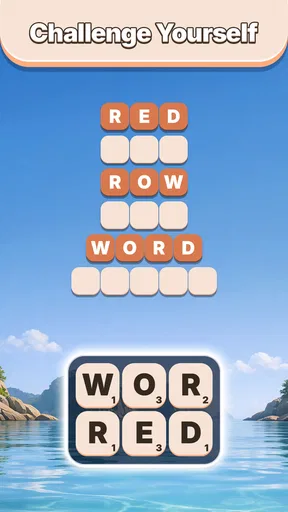
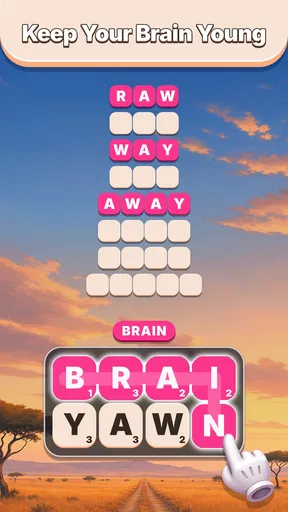
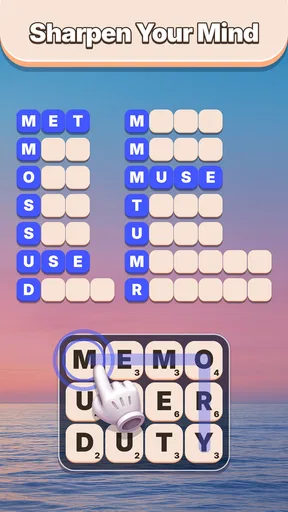
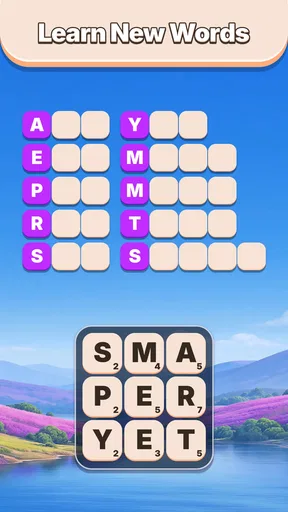
 Analysis by AppCompare
Before installing Word Tiles - Relaxing Puzzle, I’d make one practical distinction: it costs nothing to get started, but it does include optional in-app purchases. Those items range from $1.99 to $49.99 each, so “free” describes the entry point, not every possible expense. I’d treat the game as a free trial of its word-search style and make any spending decision only after checking what a particular offer actually includes.
A sensible way to try it
If you’re unsure whether tile-based word puzzles are your thing, give the free play a fair chance during a few short sessions before considering a purchase. That helps separate enjoyment of the core activity from the appeal of an offer shown at a particular moment. I’d also avoid buying just to resolve a frustrating pause: first step away, then return with fresh eyes. If the puzzle itself is still enjoyable, you have a better basis for deciding whether any optional item is worth its price.
I like word puzzles best when they give me something to focus on without turning a quiet break into another deadline. Word Tiles - Relaxing Puzzle is aimed at that easygoing corner of the puzzle genre: it is a free game from Agave Games built around word tiles, and its appeal is clearest when I want a small mental reset rather than a demanding challenge. Its 4.9 average from around 17,000 ratings is encouraging, though ratings alone cannot tell you whether its pace will suit you.
A gentle word-game routine, with a few things to weigh
I find a tile-based word puzzle easiest to judge by how it fits into an ordinary pause, rather than by assuming it will become a long-term hobby. I’d use a few relaxed sessions to notice whether searching the letters feels absorbing or starts to feel like effort, while keeping the optional spending separate from that first impression. That gives me a practical basis for thinking about pace and pressure.
Where it fits in a day
For me, the best use case is a short pause between tasks: open a puzzle, look for a word, and give my attention a different job for a little while. That is a more natural fit than expecting a sprawling story or a deep strategy game. The game’s puzzle focus makes it easy to understand the basic appeal, while the “relaxing” framing suggests a calmer experience than timed word competitions. I would approach it as a casual companion, not as a replacement for a daily newspaper puzzle or a serious vocabulary workout.
That distinction matters because “relaxing” does not mean “effortless.” Word puzzles can still feel satisfying when a solution takes a moment, but they can also become frustrating if you are tired, distracted, or stuck on a word. I find these games work best when I let myself pause rather than treating every board as a test. If you want to unwind, a useful habit is to play only when you have enough attention to enjoy searching, and stop when the hunt starts feeling like work.
The game is listed in the puzzle category and has an Everyone age rating, so it is positioned for a broad audience. That makes it an approachable option to consider for casual play, although the age label is not a promise that every player will enjoy the same difficulty or style. The core question is simpler: do you like scanning letter tiles and trying possible words? If that small loop appeals to you, this is a more relevant choice than a crossword app built around clues or a word game that emphasizes head-to-head competition.
Worth Reading Before You Choose

Flipboard Shows What News Apps Must Do Beyond the Feed

Switching to Android Auto Means Rethinking Your Driving Routine

Google Calendar Makes a Crowded Week Easier to Manage

Ludo King Makes the Most of the Minutes Between Plans

Baby Panda World Brings Quick Play to Modern Phones, but Its Game Library Feels Busy

ESPN’s Live Game View Makes Following Close Games Easier
What “free” means for a player
You can get started without paying: the game is free, but it offers in-app purchases priced from $1.99 to $49.99 per item. I consider that an important part of the decision, not a footnote. The existence of purchases tells me there are paid options in the app, but it does not tell me what each one contains, whether they affect progression, or how often a player is prompted to buy. I would not assume that paying is necessary—or that every purchase is purely cosmetic—without seeing those details in context.
My practical advice is to begin with the free experience and decide whether the game’s basic rhythm is enjoyable before spending anything. If a purchase screen appears, take a moment to read the item description and price rather than tapping through automatically. That is especially useful in a game you may open for brief sessions, where an impulsive purchase can feel out of proportion to how much you actually play. The broad price range also means it is sensible to treat each offer on its own terms, rather than assuming all purchases are small or interchangeable.
For families, the Everyone rating is reassuring as a general content signal, but I would still keep purchase settings in mind on a shared device. The rating and the presence of paid items answer different questions: one concerns suitability of content, while the other concerns spending. If a child uses the device, it is worth reviewing the device’s purchase controls and making sure the child understands that free access and optional spending are separate things.
Progress without turning play into pressure
The strongest reason to choose a mellow tile-based word puzzle over a competitive alternative is control over your own pace. In a typical word duel, an opponent, a clock, or a score target can make every pause feel costly. A quieter solo puzzle is better suited to someone who wants to think at their own speed. I would pick this style while waiting for an appointment or settling down after work, rather than when I want the social energy of a match against another person.
There is a trade-off, though. A self-paced format can be less compelling if you need clear milestones, a long-term campaign, or a visible reason to return every day. The available description establishes a word-tile puzzle, but it does not establish how progression works, so I would not choose it expecting streaks, unlock trees, levels with a particular structure, or a specific reward system. If those systems are what keep you motivated, a game that openly centers them may be a better fit.
A small search routine that helps
One useful way to keep a word-tile game engaging is to change how you search rather than simply stare at the board. I tend to scan for familiar letter pairings first, then look for endings or beginnings that might connect into a word. If I get stuck, I shift my eyes to a different part of the layout instead of repeating the same guess. That kind of small routine can make a puzzle feel less like random searching and more like a deliberate exercise, without needing to rush.
Another sensible approach is to separate “I cannot see it yet” from “this is not fun right now.” When a board stops being enjoyable, taking a break is often better than pushing through just to finish. That advice is particularly relevant for a game presented as relaxing: its value is in the quality of the pause, not in proving that you can complete every puzzle in one sitting. If you prefer measurable challenge, a timed word game may give you clearer feedback; if you prefer low-pressure focus, this kind of tile puzzle is the more natural direction.
Fairness and the limits of what I can judge
For a puzzle game, fairness usually comes down to whether the challenge feels understandable and whether paid options change the balance. I cannot responsibly claim that this game has a particular hint system, energy limit, leaderboard, or purchase advantage, because those details are not established here. What I can say is that the free entry point and listed optional purchases make it worth checking how an offer relates to the puzzle you are trying to solve before buying. That is a more useful standard than assuming every purchase is either harmless or essential.
If you are looking for competitive fairness, this may not be the category’s strongest match simply because the known focus is word-tile puzzling, not competition. I would compare it with a head-to-head word game only if playing against other people is central to what you want. Likewise, someone who wants a pure, one-time purchase with no optional spending should review the in-app purchase setup carefully before settling in. The game can still be a reasonable free try, but its purchase range makes that check part of an informed choice.
There is also a difference between fairness and difficulty. A puzzle can be fair yet still be too easy or too hard for a particular player. Since a store summary cannot tell me how the difficulty changes from one board to another, I would judge it after a few sessions: do the word searches feel satisfying, and can you walk away without feeling pushed to spend? If the answer is yes, the game is doing its job for you. If you repeatedly feel blocked or nudged toward purchases, another word puzzle with a clearer fit may be preferable.
Who should try it—and who may prefer something else
I would recommend giving it a try if you enjoy finding words in a tile layout, want a casual puzzle to fill short gaps, and do not need a competitive opponent to stay interested. It also makes sense for someone who prefers a focused activity over a game full of complex rules. With 100,000 or more installs, it has reached a sizeable casual audience, and its 536 written reviews offer another reason to browse player reactions if you want more perspectives before installing.
I would steer away if your ideal word game is built around clues, spelling instruction, a live match, or a clearly documented progression system. Those are different pleasures, and a tile-search format cannot be assumed to provide them. I would also skip it if you specifically want to avoid all in-app purchase offers; the game is free to download, but purchases are part of its business model. The current version is 1.5.0, and it requires Android 10 or later, so device compatibility is worth checking before you plan to play.
How it compares with familiar word games
Compared with crosswords, this kind of game asks you to spot words from tiles rather than solve definitions. Compared with an anagram game, its appeal is more visual: the arrangement of letters matters to the search. And compared with competitive word titles, it is a better candidate for a quiet solo break than for testing yourself against an opponent. Those are category-level differences, not guarantees about every screen or mode, but they are a practical way to decide whether this style belongs on your phone.
A useful everyday test is to imagine having a few minutes before an appointment. If you want to dip in, focus on letters, and put the phone away without needing to remember a plot or coordinate with another player, a tile puzzle makes sense. If you have a longer stretch and want a structured challenge with clues, a crossword may use that time better. If you want interaction and a direct measure of how you compare with someone else, a competitive word game is the more natural alternative.
My trust verdict
My overall view is cautiously positive. The concept is easy to place: a free, casual word-tile puzzle from Agave Games, with an Everyone rating and optional purchases. The audience response is strong, but I would treat the average rating as a starting point rather than proof that the experience is perfect for everyone. The most important decision is whether you enjoy searching tiles at an unhurried pace, and whether the available purchase choices feel comfortable once you see them in the app.
I would install it for a low-commitment trial if I wanted a calm word puzzle, especially for short breaks when I did not want a timed match or a clue-heavy crossword. I would keep spending optional, pay attention to any purchase description, and switch to another title if I wanted more transparent progression or a stronger competitive element. My recommendation is to try it for the puzzle itself, not for assumptions about features or rewards that have not been established. If the simple act of spotting words is what you enjoy, Word Tiles - Relaxing Puzzle sounds worth a look; if you need richer structure or a no-purchase experience, compare alternatives first.
Pros
- Easy-to-learn rules make it approachable for a wide range of players.
- Short rounds fit well into a quick break or commute.
- Word challenges can provide a gentle workout for vocabulary and pattern recognition.
- Relaxed pacing lets you solve puzzles without time pressure.
- A simple tile-based format keeps the focus on finding words.
Cons
- Some puzzles may feel repetitive after extended play.
- Difficulty can vary
- so experienced word-game fans may want tougher challenges.
- Small tiles may be harder to use on phones with compact screens.
- Hints can reduce the satisfaction of solving a puzzle independently.
- Progress may feel slow if you prefer games with a clear story or campaign.
FAQs for Word Tiles - Relaxing Puzzle
What is Word Tiles - Relaxing Puzzle?
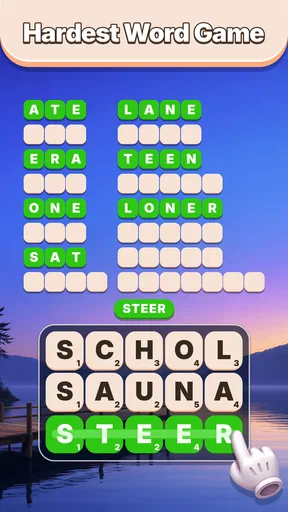
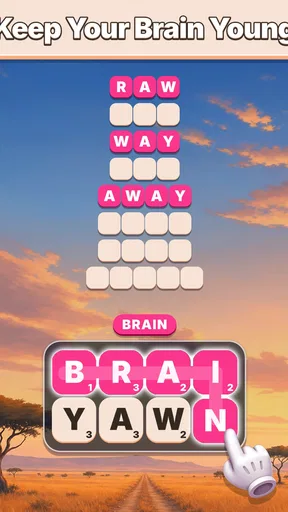
Word Tiles - Relaxing Puzzle is a word-search-style game built around finding words hidden in a grid of letter tiles. You swipe across letters to form the words requested by each level, with the puzzles generally becoming more challenging as you progress. Its relaxed presentation makes it suitable for short play sessions, while the word-finding challenges offer a simple way to exercise vocabulary and pattern recognition.
How do you play Word Tiles - Relaxing Puzzle?
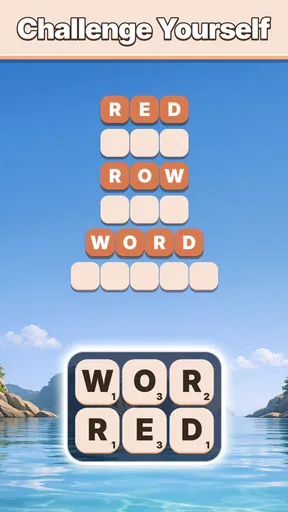
Each puzzle presents a board of letters and a set of words to find. Drag or swipe across adjacent tiles to spell a valid word; completed words are removed or marked, depending on the puzzle layout. Read the clues or word list carefully, since some boards include overlapping possibilities that can be easy to miss. The basic controls are straightforward, though later levels may take more observation and trial and error.
Can I play Word Tiles - Relaxing Puzzle offline?
Availability of offline play can depend on the game version and its specific features. Core puzzles may be playable without a connection once the game and relevant level data are available on your device, but features such as advertisements, cloud saves, daily content, or other online services may require internet access. Check the app listing and test a level in airplane mode if offline access is important to you.
Is Word Tiles - Relaxing Puzzle free, and does it include ads or in-app purchases?
The game may be free to download, but free mobile puzzle games commonly support themselves through advertising and may offer optional in-app purchases, such as hints or an ad-free option. The exact offers and prices can vary by platform, country, and version. Review the Google Play Store or Apple App Store listing before installing, and check your device’s purchase settings if you want to prevent accidental transactions.
Is Word Tiles - Relaxing Puzzle suitable for children, and what should I know before downloading?
Word puzzles can be accessible to a wide range of ages, but suitability depends on the vocabulary used, the difficulty of later levels, and the app’s advertising and privacy practices. Before downloading, check the store’s age rating, developer information, permissions, and privacy disclosures. If a child will play, consider reviewing the ads and available purchases first, and use parental controls to manage spending or screen time as needed.


